Custom AI Chatbot Development — 2026 Playbook
Off-the-shelf chatbots frustrate users. Custom ones solve real problems — when built correctly. Here's the playbook we use for production AI chatbot development, from RAG architecture to evaluation harnesses to human handoff.
Every company wants an AI chatbot. Few companies build one that users actually want to talk to.
The gap between a working chatbot demo and a production chatbot that reduces support tickets is enormous. It's not about the model. It's about the architecture, the training data, the evaluation, and the handoff logic that surrounds the model.
This is the playbook we use at QA Labs when building custom AI chatbots for clients.
What makes an AI chatbot "custom"
Off-the-shelf chatbots (Intercom Fin, Zendesk AI, Drift) are fine for generic use cases. Custom chatbots are built when:
Your domain has specialized knowledge that general models get wrong
You need to integrate with proprietary systems
You have compliance requirements (HIPAA, GDPR, SOC 2)
Your brand voice is critical
You want control over cost, latency, and data
The architecture that works
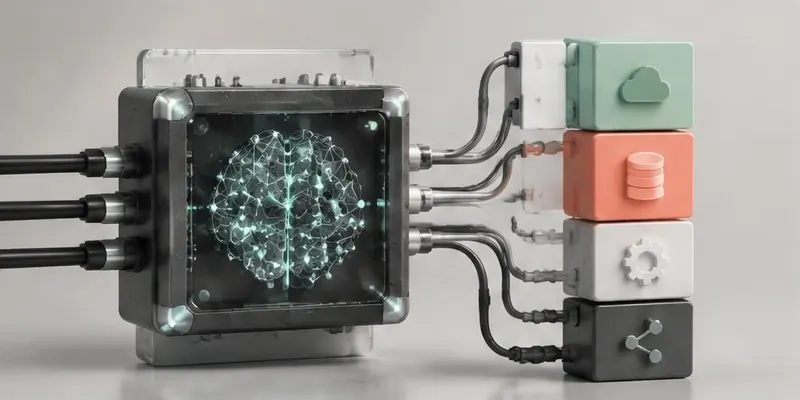
A production chatbot has five layers:
The LLM — GPT-4, Claude, or an open-source model (Llama, Mistral)
The RAG layer — Retrieval-Augmented Generation, which anchors the LLM to your data
The orchestration layer — Manages conversation state, tool use, and multi-step flows
The guardrails layer — Prompt injection protection, PII redaction, output filters
The handoff layer — Routes to human support when the bot can't handle it
Most failures happen because teams build only layer 1 (the LLM) and expect it to work.
Why RAG is non-negotiable
LLMs hallucinate. They make up facts confidently. If your chatbot answers a billing question with a fabricated policy, you have a legal problem.
RAG (Retrieval-Augmented Generation) solves this by anchoring the LLM to your actual data — help docs, knowledge base, policies, product info. The LLM doesn't answer from memory; it answers from retrieved context.
We've measured hallucination rates drop from 15–20% (LLM alone) to under 2% (LLM + RAG). That's the difference between a chatbot that helps and one that damages trust.
Evaluation harnesses — the missing piece
Before you launch, you need a test suite of real user questions with expected answers. Run every model change, prompt change, or RAG change against this suite.
We typically build eval sets of 300–500 questions covering:
Common requests
Edge cases
Adversarial prompts (prompt injection attempts)
High-risk queries (legal, medical, financial)
Fallback scenarios
Track accuracy, tone, and safety scores on every run.
Human handoff design
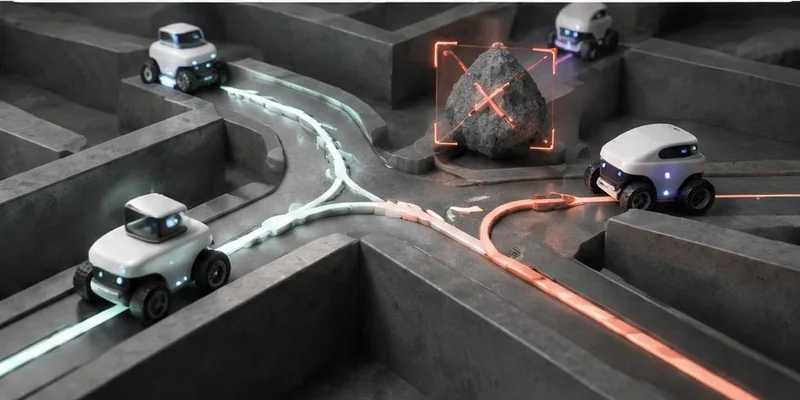
Every chatbot needs an escape hatch. When the bot fails, unclear, or the user asks for a human — hand off cleanly.
Good handoff design:
Detects when the bot is uncertain
Offers human handoff proactively (not just when the user asks)
Passes full conversation context to the human agent
Sets clear expectations ("A human will be with you in ~2 minutes")
Cost engineering
Custom chatbots have a real cost per interaction:
LLM API cost (input + output tokens)
Vector database cost (for RAG)
Hosting and orchestration cost
We measure cost per resolved conversation. For most clients, it lands between $0.05 and $0.30 per conversation — dramatically cheaper than human support, but only if the resolution rate is high enough.
Common mistakes
Skipping RAG
No evaluation harness
No guardrails against prompt injection
No cost tracking
No human handoff
Treating launch as the finish line (it's the start of iteration)
Key takeaways
- Custom chatbots need 5 layers, not just an LLM
- RAG drops hallucination rates from 15% to <2%
- Evaluation harnesses are mandatory before launch
- Human handoff is a feature, not a fallback
- Track cost per resolved conversation as your primary metric
Further reading
About the author
Senior AI Engineer →Senior AI Engineer · Quality Assurance Labs