Software QA Testing — The Complete 2026 Guide
Software QA testing isn't just finding bugs. It's a structured discipline that protects revenue, users, and brand trust. This is the complete 2026 guide covering scope, process, tools, and the metrics that actually prove ROI.
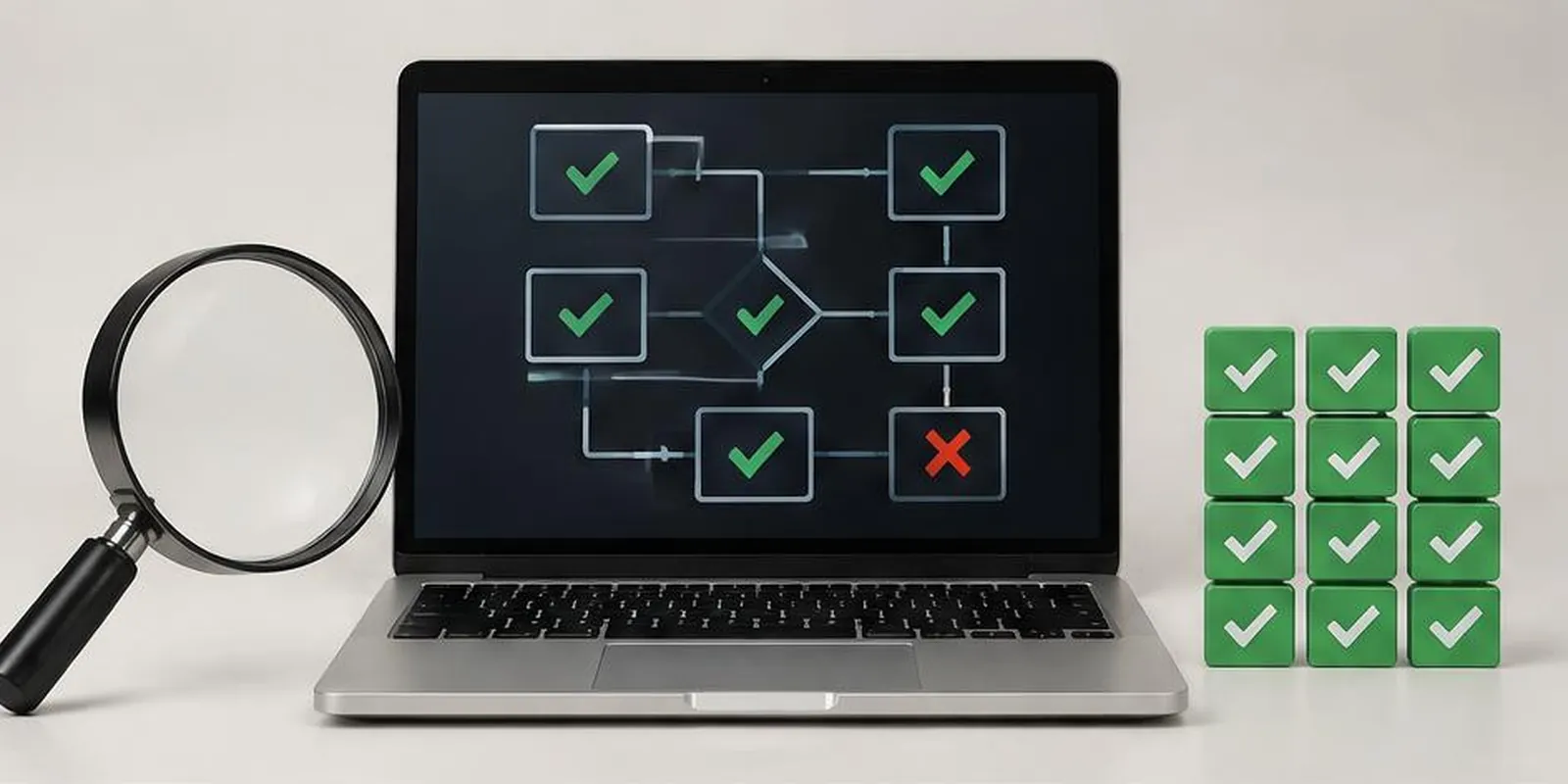
Software QA testing is the most under-invested function in most engineering orgs. Teams ship features fast, tests lag behind, and the discipline gets treated as a cost center instead of a revenue protector. That framing is expensive.
This guide covers what software QA testing actually covers, how to structure it, which tools to use at each stage, and how to measure the ROI of QA so leadership sees it as investment, not overhead.
What software QA testing actually covers
QA testing is not just "manual testing before release." In 2026, it spans at least six distinct disciplines:
Functional testing — Does the feature do what the spec said?
Exploratory testing — What breaks when a real human tries to use it in unexpected ways?
Regression testing — Did this change break something that worked yesterday?
API testing — Does the backend behave correctly under auth, load, and edge cases?
Performance testing — Does the product hold up under real traffic?
Security & accessibility — Can attackers exploit it? Can users with disabilities use it?
Skipping any one of these layers leaks bugs to production. The best teams cover all six from day one.
When to start QA
The right answer is: earlier than you think. QA isn't a phase that runs after development. It runs in parallel — from requirements review through release sign-off.
The cost of a defect doubles with every stage it survives. A bug caught in requirements costs $1 to fix. In development, $10. In QA, $100. In production, $1,000+. Every dollar spent on early QA returns $10–100 downstream.
Tools by stage
Requirements & planning: Jira, Linear, TestRail, Qase
Manual & exploratory: TestRail, Xray, browser dev tools
Automation: Playwright, Cypress, Selenium, Appium
API testing: Postman, Newman, Insomnia, RestAssured
Performance: k6, JMeter, Lighthouse
Security: OWASP ZAP, Burp Suite
Accessibility: axe, WAVE, VoiceOver, TalkBack
CI integration: GitHub Actions, GitLab CI, Jenkins, CircleCI
The right tool depends on your stack and team. Don't stack tools you won't use — pick three or four and go deep.
KPIs that actually matter
Most QA teams track the wrong things. Vanity metrics (test case count, test run count) don't predict quality. These do:
Escaped defect rate — bugs found in production vs. caught pre-release
Mean time to detection (MTTD) — how fast bugs are found after release
Regression escape rate — how often old bugs return
Test coverage on critical paths — % of top 20 user flows automated
Release confidence score — subjective read on whether the team trusts the release
Track these weekly. Report them monthly to leadership. When escape rate drops, ROI is visible.
The cost of skipping QA
The most expensive bugs aren't the ones you find. They're the ones you didn't. A payment flow bug in production costs 100x more than one caught pre-launch. A security breach costs 1,000x. A failed product launch can end a company.
QA is insurance. It's not optional if your product matters.
How QA Labs runs software QA
We start with a two-week diagnostic sprint: audit the product, map critical user flows, identify risk areas. Then we build the test strategy, execute, and hand over a system your team owns — not a black box that leaves when the engagement ends.
Key takeaways
- Software QA testing covers 6 distinct layers — functional, exploratory, regression, API, performance, security/accessibility
- Start QA early: defects cost 10x more at each stage they survive
- Pick 3–4 tools and go deep instead of stacking 10 you won't use
- Track escape rate, MTTD, and regression return — not vanity metrics
- QA is a revenue protector, not a cost center
Further reading
About the author
Senior QA Engineer →Senior QA Engineer · Quality Assurance Labs