QA Outsourcing in 2026: Models, Costs and How to Choose
When outsourcing QA pays off, the three engagement models, what really drives the cost, and the questions that separate a QA partner from a bug-reporting service.
- QA-outsourcing
- software-testing-outsourcing
- QA-partner
- offshore-QA
- QA-testing
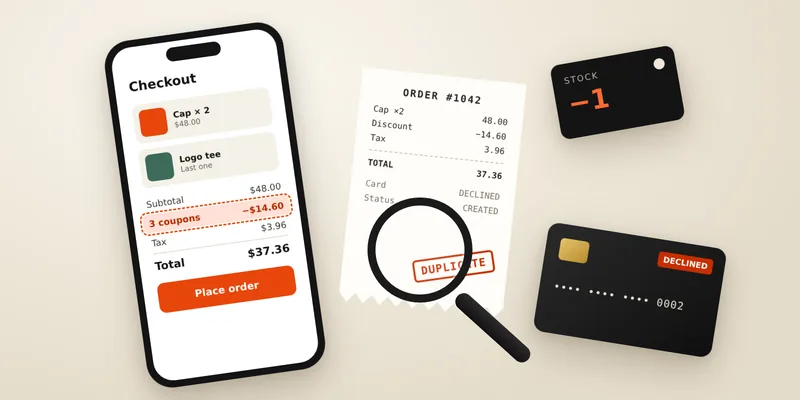
Most teams start outsourcing QA after a bad release: a payment bug that reached customers, an app update that crashed on older phones, or a launch that slipped because developers spent the last week testing their own code. Outsourcing can fix that, but only if you pick the right model and the right partner. A poor fit gives you a long list of low-value bug reports and a team that never learns your product.
This guide covers when outsourcing QA makes sense, the three common engagement models, what actually drives the cost, how to compare vendors, and how to run the first month so the arrangement works. It is written from the vendor side: QA Labs is a remote QA and development team, so we have seen what makes these engagements succeed and what makes them stall.
What QA outsourcing means
QA outsourcing means an external team plans and runs some or all of your software testing. That can be manual testing of new features, building and maintaining test automation, or specialist work such as performance, security and accessibility testing. The external team works inside your process: your tracker, your release calendar, your staging environments and your definition of done.
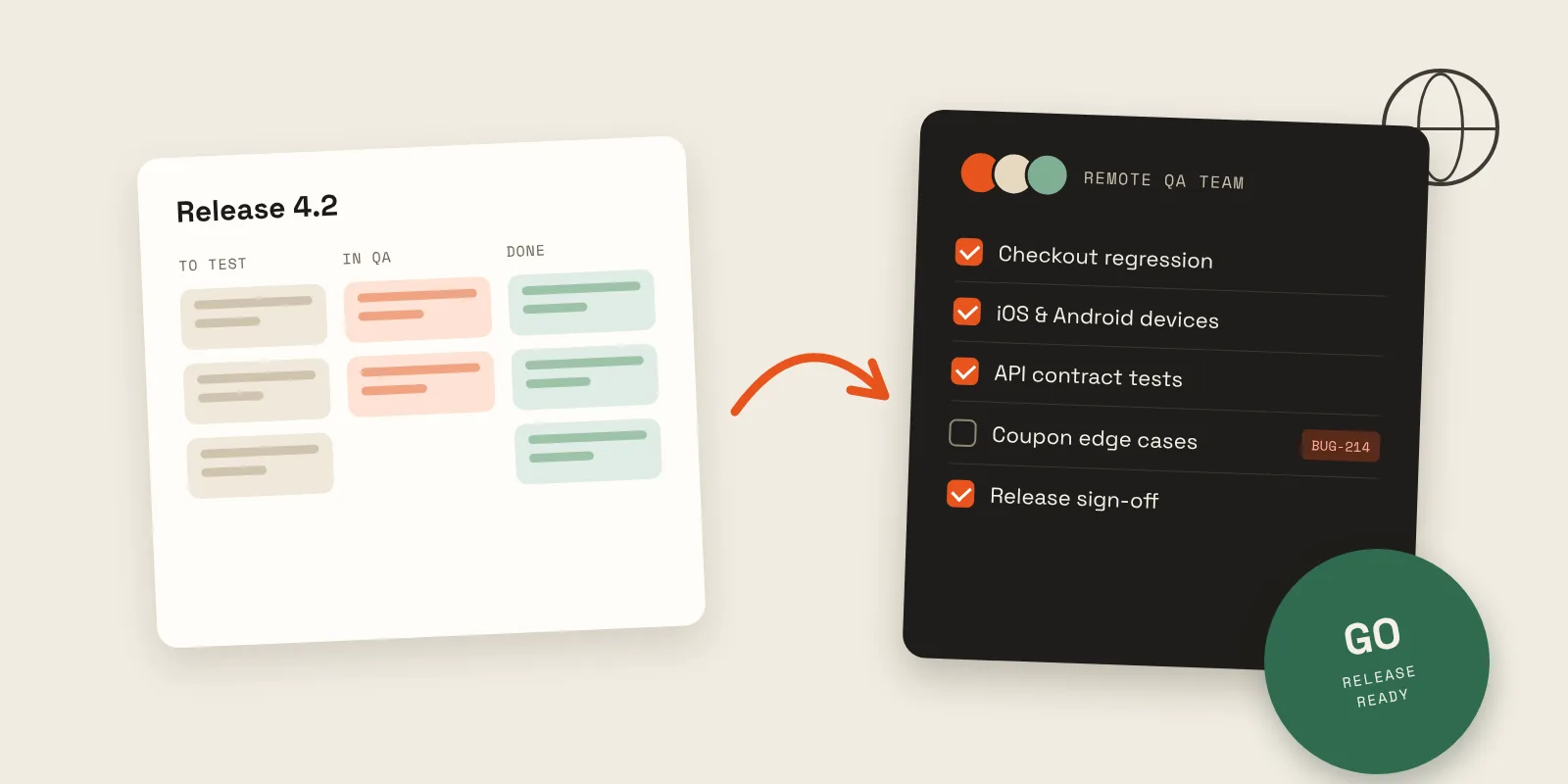
It is different from crowdtesting, where many independent testers run short sessions on your app, and from buying a testing tool. With outsourced QA you get a stable team that learns your product, owns test coverage and gives a clear go or no-go before each release.
When outsourcing QA makes sense
- No dedicated QA yet: developers test their own work, and bugs found by customers keep rising as the product grows.
- Release pressure: you ship weekly or faster, and regression testing has become the bottleneck before every release.
- Skills you don't have in-house: test automation, mobile device coverage, load testing, security or WCAG accessibility audits.
- Uneven workload: you need extra testing around launches and big releases, but not a full-time hire all year.
- A second opinion: your own QA team is strong, but you want an independent audit before a funding round, a big customer or a compliance review.
Outsourcing is usually the wrong first move when the product changes direction every week and nobody can describe what correct behaviour looks like. In that case, start with a short audit and a written test strategy, then decide.
The three engagement models
Almost every QA vendor offers some version of these three models. The right one depends on how steady your testing workload is and how much of the process you want the vendor to own.
| Model | How it works | Best for | Watch out for |
|---|---|---|---|
| Dedicated team | One or more testers work on your product every month, attend your stand-ups and own regression and release sign-off | Products with weekly releases and a long roadmap | Paying for idle time if your release cadence drops |
| Project-based | A fixed scope such as a pre-launch test pass, an automation suite or a performance test, with an agreed deliverable | Launches, migrations and one-off audits | Scope creep; agree what is in and out before work starts |
| On-demand hours | You buy testing hours and call on them when you need extra hands | Uneven workload and small teams | Testers may change, so product knowledge has to be written down |
Many teams combine them: a project to set up the test strategy and core automation, then a smaller dedicated team to keep it running.
What drives the cost
Hourly rates differ a lot by country and seniority, but the rate is rarely what makes an engagement expensive. These factors move the total more than the headline price:
- Scope and platforms: one web app in two browsers is far less work than web plus iOS and Android across a device matrix.
- Release frequency: weekly releases need fast, repeatable regression, which usually means investing in automation early.
- Manual versus automated mix: automation costs more to build and saves time on every later release; manual testing is cheaper to start and grows with every feature.
- Specialist testing: performance, security and accessibility work needs senior people and tools, and is usually priced as separate projects.
- Seniority: a senior tester who designs the strategy and writes clear bug reports costs more per hour but wastes far fewer of your developers' hours.
- Onboarding and access: slow access to environments, test data and accounts burns paid time in the first weeks.
When you compare quotes, compare the cost of a release your team trusts, not the hourly rate. A cheaper team that misses the bug in your checkout or reports twenty cosmetic issues a day is the expensive option. Our own rates are published on our pricing page, and every QA engagement starts with a free scoping call and a short written audit, so you can judge the work before you pay for it.
12 questions to ask a QA vendor
- Who exactly will test our product: names, seniority and years of experience, not a generic team page?
- How will you learn our product in the first two weeks, and what will you write down?
- Can we see a sample bug report and a sample test plan from real work?
- How do you decide what to automate, and which frameworks do you use (Playwright, Cypress, Appium, Postman, k6)?
- Who owns the automation code, and does it live in our repository?
- Which devices and browsers will you test on, and are they real devices or emulators?
- How do you report progress: daily notes, a release-readiness summary, dashboards?
- What happens when a tester leaves or is on holiday?
- How do you handle our data, credentials and production access?
- Which time zones do you cover, and how fast will you answer a question before a release?
- Can we start with a small paid pilot or a free audit before committing?
- Can we speak to a client whose product is similar to ours?
Good vendors answer these with specifics and examples. Vague answers to the first three questions are the clearest warning sign.
Red flags
- No sample reports: if a vendor can't show a redacted bug report or test plan, you can't judge the quality of their work.
- Bug counts as the main metric: more bugs is not better. Ask how they rank severity and how many reports were real defects.
- Automation that only they can run: scripts on the vendor's machines, in their own repository, lock you in.
- Rotating testers: if every week brings a new person, nobody learns your product.
- No questions about your users: a team that doesn't ask what matters most to your customers will test the wrong things first.
How to run the first 30 days
- Week 1, access and context: give the team staging access, test accounts, the tracker and a walkthrough of the top user journeys and recent incidents.
- Week 2, strategy: agree a written test strategy, a risk-ranked list of features, the device and browser matrix, and the bug severity scale.
- Week 3, first full test pass: the team runs regression on a real release and reports in your tracker using the agreed format.
- Week 4, review: look at which bugs mattered, how long reports took to triage and what to automate first, then set the plan for the next quarter.
After the first month you should have a written test strategy, a regression checklist or first automated suite, and a clear release sign-off step. If you don't, the engagement needs fixing before it grows.
Onshore, nearshore or offshore
Location changes the rate and the working hours more than the quality. Offshore teams in South Asia or Eastern Europe cost less per hour and can test overnight, so developers find reports waiting in the morning. Nearshore teams share more working hours. What matters most is overlap for urgent questions before a release, written English that developers can act on without a call, and a stable team. QA Labs is based in Bogura, Bangladesh, and works with clients in the US, UK, Europe and Australia, with agreed overlap hours for release days.
Outsourced QA or an in-house hire?
An in-house QA engineer is the right choice when testing work is steady, your product needs deep domain knowledge, and you can afford a full-time salary plus tools and devices. Outsourcing wins when you need several skills at once (manual, automation, mobile, performance), when the workload is uneven, or when you need coverage quickly. Many teams use both: an in-house QA lead who owns quality, with an outsourced team for regression, automation and specialist testing.
Key takeaways
- Outsource QA when developers test their own work, releases are bottlenecked or you lack specific testing skills
- Pick the model by workload: dedicated team for steady releases, projects for launches and audits, hours for uneven demand
- Compare the cost of a trusted release, not hourly rates
- Ask for named testers, sample bug reports and automation that lives in your repository
- Run the first 30 days to a written strategy, a regression suite and a clear release sign-off
Free QA spot-check
Want a QA engineer to look at your product?
Send us your website or web app address. An engineer will test one key journey, such as sign-up, search or checkout, on desktop and mobile, and email you the most important issues we find. Free, and no call needed.
Related service
QA Testing →Automated suites, manual deep-dives, and CI guardrails that catch regressions before your users do.
Further reading
About the author
Kawsher, Founder, QA Labs →Kawsher is the founder of Quality Assurance Labs (QA Labs), the QA-first software testing and development company in Bogura, Bangladesh, founded in 2021. Every article and case study on this site is written or reviewed by Kawsher, drawing on the team's QA testing, AI, web, mobile, video and marketing work for SaaS and AI teams worldwide.